This website is for healthcare professionals - NIOX PRO® is available in the following countries.

Thunderstorm Asthma

Can storms cause asthma?

It is understood that changes in weather and environmental factors can cause asthma, but did you know there is such phenomenon as thunderstorm asthma?1 We take a look at what causes thunderstorm asthma and some of the risk factors involved.

Last updated: September 2024

Share this article: - - -

Although rare, thunderstorm asthma has been formally recorded since 1983 around the world.

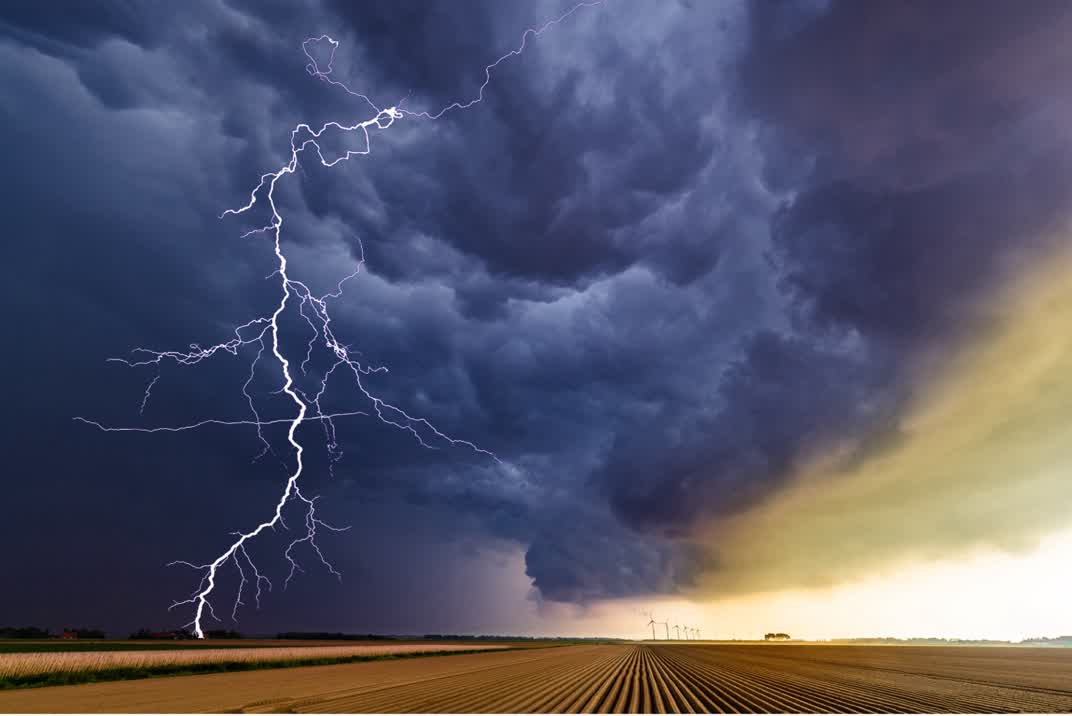
Cold weather, pollution, hot, and even humid weather are all known seasonal triggers of asthma; however, a lesser-known trigger is thunderstorms.1,2 Yes, that is right, thunderstorms can trigger asthma in certain circumstances.1 Thunderstorm asthma is a term used to described an asthma attack that starts or worsens following a thunderstorm.3

Although rare, thunderstorm asthma has been formally recorded since 1983 around the world, notably; Birmingham and London in the United Kingdom, Naples in Italy, and events in Australia, with the largest recorded event occurring in Melbourne, Australia in November 2016.4-6 

The thunderstorm event in Australia which occurred on 21st November 2016 saw a 73% increase in ambulance call outs for asthma symptoms, a 672% increase in people presenting with breathing issues, and an increase of 992% for asthma-related hospital admissions.4,6 10 deaths were also associated with the event.6 This highlights the potential threat that thunderstorm asthma has on public health.6

Listen to this article

Click play to listen to this article:

0:00 0:00
Can storms cause asthma?

How does thunderstorm asthma occur?

Thunderstorm asthma is typically triggered by high pollen or other aeroallergens.5,7 Under normal weather conditions, pollen grains can penetrate the upper respiratory tract, however, when they are broken apart by thunderstorms into smaller fragments, they are able to penetrate further into the airways triggering asthma symptoms.5,7 

It is theorised that the excess moisture in clouds split apart pollen grains and fungal spores by osmotic shock.4,7 This causes them to break into smaller, inhalable parts. The rain then brings these particles down to ground level where the micro-particles can be inhaled deep into the lungs.4 Inhalation of high concentrations of these allergens can induce asthmatic responses in sensitised individuals.4,5

Rainfall usually removes pollen from the air, but, during a thunderstorm, updrafts bring whole pollen into the cloud base where they split, and the cold downdrafts bring the fragments to ground level where strong winds disperse them.5

Symptoms of thunderstorm asthma are usually rapid-onset which makes it particularly risky for asthma sufferers.7

Can storms cause asthma?

Who is at risk?

It has been shown that 90-100% of those affected with acute breathing difficulties following thunderstorm events have a history of allergic rhinitis.7

People at risk from thunderstorm asthma include:

  • Those who already suffer with asthma 7
  • Those who suffer from seasonal allergic rhinitis (with or without asthma) 7
  • Those sensitised to the triggering allergen 7
  • Those who have asthma and are not adequately controlled with preventative asthma inhalers. 7

Other risk factors named by the Harvard Medical school include low scores on rapid exhalation tests, higher levels of ryegrass pollen-specific IgE, high eosinophils and high FeNO.3

Previous thunderstorm asthma events have also indicated that young adults (below 30) can be particularly affected.4

In the UK, approximately 1 in 12 adults and 1 in 11 children suffer with asthma, and allergic rhinitis affects between 10-15% of children and 26% of adults in the UK, which means that a large proportion of the UK population may be susceptible to thunderstorm asthma.8,9

Latest webinar:

Discover our latest FeNO webinar today.

Prof Backer and Dr. Couillard

What is FeNO Testing?

Fractional exhaled nitric oxide (FeNO) testing is a simple, non-invasive, and rapid point-of-care test to measure airway inflammation associated with Type 2 asthma.*

FeNO testing involves inhaling then exhaling through the device to measure a patient’s FeNO level and can be used on adults and children.**

FeNO testing is a quick and easy way to diagnose and manage asthma.*

* Alving K et al. Validation of a new portable exhaled nitric oxide analyzer, NIOX VERO®: randomized studies in asthma. Pulm Ther. 2017;3:207-218. ** NIOX®. Product Labelling Summary NIOX VERO®. 2023.

What can you do?

Although rare, these events can have major impacts on public health, including overwhelming emergency departments.4 It is important to educate your patients on the importance of taking their asthma medication as prescribed, as these events can put patients whose asthma is not in control, at risk. 7,10

It is important that patients adhere to their preventer medications to reduce the risk associated with thunderstorm asthma.7,11 A FeNO (Fractional exhaled nitric oxide) test can monitor patient adherence to their inhaled corticosteroids (ICS), and help you titrate dosage to best control your patient’s asthma.12-14

Encourage patients to seek medical attention if their asthma symptoms get worse or if seasonal rhinitis sufferers develop asthma symptoms (wheeze, breathlessness, cough). 7

It is also important to adequately control seasonal rhinitis.9 Why not check out our tips for managing asthma during hay fever season?


Thunderstorm asthma is a rare phenomenon, however, as seen with the 2016 Melbourne event, it can pose a potential threat to public health.6 To find out more about asthma and FeNO, head to our FeNO learn app where you will also find our educational FeNO course.
Discover FeNO Testing

Learn about FeNO with our free app

Why NIOX®

Explore the Gold Standard device*

Understand FeNO Scores

Use our interpreting FeNO calculator

* NIOX®. Data on File; MKT-DOF-007. 2024.

NIOX® Customer Support and Training

At NIOX® we are passionate about providing excellent support and training.

References:

  1. Asthma and Allergy Foundation America. Weather. Available at: https://aafa.org/asthma/asthma-triggers-causes/weather-triggers-asthma/. Accessed on: May 2024 
  2. Asthma & Lung UK. Hay fever, air pollution and thunderstorms. Available at; https://www.asthmaandlung.org.uk/conditions/hay-fever/links. Accessed on: May 2024. 
  3. Harvard Medical School. Thunderstorm asthma: Bad weather, allergies, and asthma attacks. Available at: https://www.health.harvard.edu/blog/thunderstorm-asthma-bad-weather-allergies-and-asthma-attacks-202206222766 . Accessed on: May 2024 
  4. UK Health Security Agency. Thunderstorm asthma and public health – looking back to move forward. Available at: https://ukhsa.blog.gov.uk/2022/03/18/thunderstorm-asthma-and-public-health-looking-back-to-move-forward/. Accessed on: May 2024 
  5. D’Amato G et al. Thunderstorm-related asthma attacks. Journal of Allergy and Clinical Immunology. 2017;139(6):1786–7. 
  6. Thien F et al. The Melbourne epidemic thunderstorm asthma event 2016: an investigation of environmental triggers, effect on health services, and patient risk factors. The Lancet Planetary Health. 2018;2(6):e255–63. 
  7. Harun NS, Lachapelle P, Douglass J. Thunderstorm-triggered asthma: what we know so far. Journal of Asthma and Allergy. 2019 May;Volume 12:101–8. 
  8. Asthma and Lung UK. What is Asthma. Available at : https://www.asthmaandlung.org.uk/conditions/asthma/what-asthma. Accessed on: May 2024 
  9. Scadding G et al. BSACI guideline for the diagnosis and management of allergic and non‐allergic rhinitis (Revised Edition 2017; First edition 2007). Clinical & Experimental Allergy. 2017 Jul 7;47(7):856–89. 
  10. Department of Health Victoria. The November 16 Victorian epidemic thunderstorm asthma event: an assessment of the health impacts: The Chief Health Officer's Report, 27 April 2017. Available at: https://www.health.vic.gov.au/publications/the-november-2016-victorian-epidemic-thunderstorm-asthma-event-an-assessment-of-the. Accessed on: May 2024 
  11. Girgis S et al. Thunderstorm-associated asthma in an inland town in south-eastern Australia. Who is at risk?. European Respiratory Journal 2000; 16: 3–8.  
  12. Porsbjerg C et al. Asthma. The Lancet. 2023. 
  13. Ali H et al. The Potential of Fractional Exhaled Nitric Oxide as a Biomarker in Predicting and Optimizing Use of Treatment in Asthma. South East European Journal of Immunology. 2023;6(1):18-23. 
  14. Loewenthal L et al. FeNO in asthma. Semin Respir Crit Care Med. 2022;43:635-645 
  15. (ref20 in pic) Alving K et al. Validation of a new portable exhaled nitric oxide analyzer, NIOX VERO®: randomized studies in asthma. Pulm Ther. 2017;3:207-218. 
  16. (ref 21 in pic)NIOX®. Product Labelling Summary NIOX VERO®. 2023. 

© Copyright NIOX Group plc. MKT-PRM-WW-0336. 2026.